A tired father enters the front door, returning from his long day at his 7-5. He removes his coat and boots and sags into the living room couch, relieved to close his eyes and rest for a moment.
Within minutes, he realizes that the wood supply is low. He’s thankful to heat his modern home with the cheap wood-burning method, but supplying the hungry flames with fuel is a chore. He sighs wearily before slowly standing up, grabbing his coat and boots, and heading out into the cold.
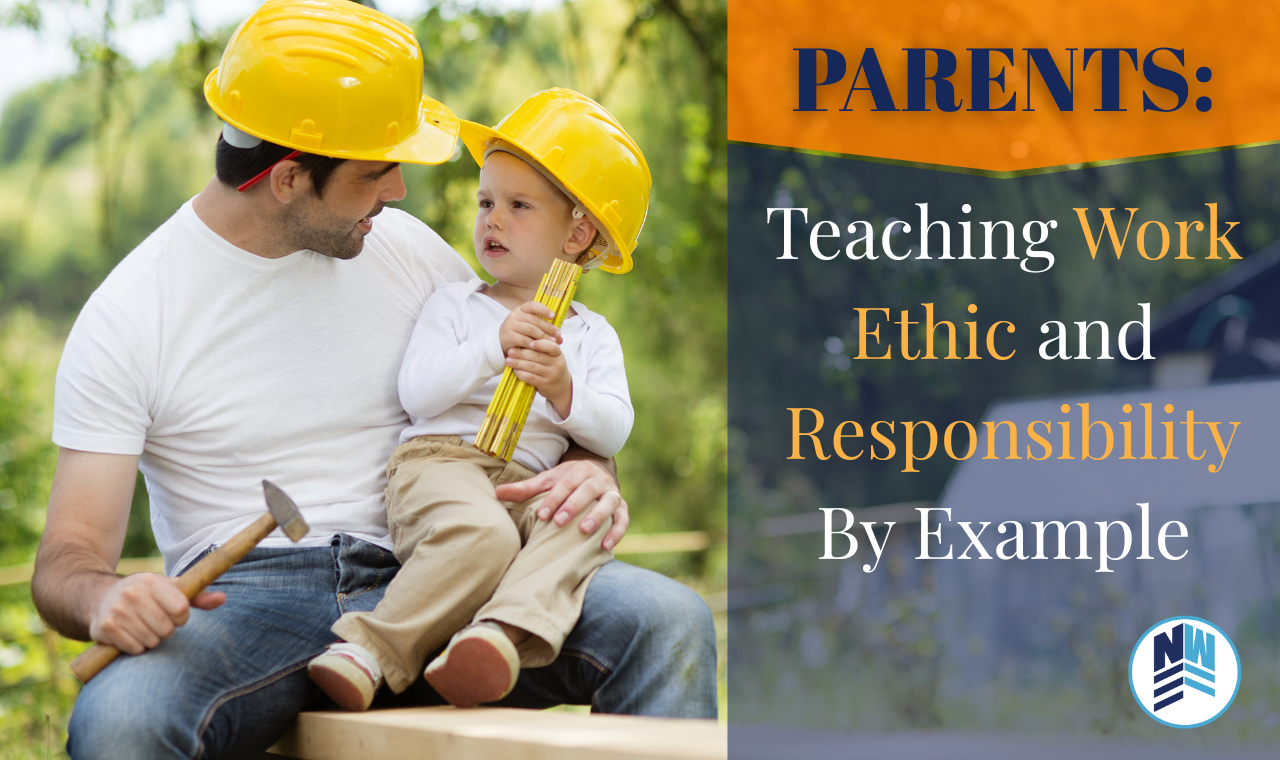
What he doesn’t know is that his three-year-old son was watching from the kitchen. As his father trudged out the door, the little man put his blocks down and ran to find his coat and tiny boots. 2 minutes later, Dad looked up in surprise as a new little shadow appeared at his side, carefully picking up toddler-sized sticks in his arms, just as he’d seen Dad do a hundred times.
I watched from the window as my husband carefully guided our son’s wood choices and helped him balance his small pile in his tiny arms.
Let’s talk straight: kids don’t absorb a lot from lectures. They soak up what they see—from how we carry ourselves to how we handle our responsibilities. They’re watching and shadowing our every move, even when we’re oblivious to the fact.
When parents consistently embody a strong work ethic and responsibility, this model carries benefits that extend beyond the family: for the child, the household, and ultimately, society.
Why Modeling Matters
Kids are tiny observers, literally wired to mimic behavior. They learn far more from our actions than our words.
“Even at a very young age, children imitate their parents’ behavior.” Parenting Counts explains. “Parent and caregiver behavior present powerful lessons to a child and leave impressions on the developing mind. Children store in their minds both positive and negative images that may be imitated or tested at a later time.”
When your child sees you tackle dinner prep, work on the lawn, pay bills without complaint, or even tackle your to-do list after a long day, they’re internalizing diligence, follow-through, and resilience.
The Ripple Effects: Child, Family, Society
Raising responsible, resilient children has benefits for more than just that one little person. It has the potential (and probability) of a long-term ripple effect. Parents who model good habits and diligent behaviours have a significant influence on the world.
The child:
Children who regularly observe strong work ethic and responsibility, dependable habits generally develop a strength of character and pursue these skills themselves.
In fact, kids who grow up participating earnestly in chores gain time-management skills, accountability, and even problem-solving traits.
“Research suggests there are benefits to including chores in a child’s routine as early as age 3.” The American Academy of Child & Adolescent Psychiatry tells us. “Children who do chores may exhibit higher self-esteem, be more responsible, and be better equipped to deal with frustration, adversity, and delayed gratification. These skills can lead to greater success in school, work, and relationships.”
Kids learn by watching. Then, they emulate what they see. They experience what responsibility feels like, not just what it means.
The family:
When parents consistently show that household tasks matter, whether it’s folded laundry or yard upkeep, children understand that everyone pitches in. When the family pulls together, it builds a sense of belonging, accomplishment, camaraderie, and strengthens family bonds.
The National Association for Child Development explains, “Learning to do things that don’t appear to directly help you is vitally important. Those children who learn to contribute and help others or their family are generally not going to be those who grow up feeling entitled. Doing things for the family helps connect the child to the family and helps provide some needed perspective.”
When kids learn by our example, we’re modelling unity, not just telling them about it.
For society at large:
Children raised with a robust work ethic grow into adults who contribute responsibly.
“A good work ethic is exemplified by the basics, including: reliability, dedication, productivity, cooperation, and strength of character.” The National Association for Child Development notes. “…Many parents neglect to realize that one of our jobs as parents is to raise our children to be functional adults, responsible, competent members of society, and perhaps parents themselves, who will need all the tools they can get to help the next generation succeed.”
A solid internal drive of duty and effort tends to produce dependable employees, engaged citizens, and future parents who pass on the tradition. That’s a multiplier effect that benefits us all.
How to Model Work Ethic Consciously
- Share your own experiences.
Include the kids in your after-work debriefs. Note the challenges you faced and how you overcame them. Don’t boast, but be honest and open. - Start early with chores—and follow through.
Start your kids early on chores. Even a 2-year-old can help unload the dishwasher (once all of the dangerous items have been removed, of course!) The three-year-old can clear the table, and the 5-year-old can carry their laundry to the wash and make their own bed. In fact, most of the time, young children are eager to help. Foster that desire by working alongside them and building a working relationship over chore time. - Be the dependable anchor.
Don’t model what you don’t want your kids to practice. If you want your kids to be punctual, make sure you do the same. Place personal value where you want your children to place theirs. - Talk about money and effort.
Have the hard conversations about the money tree. It doesn’t exist for you, and it doesn’t exist for them. Have practical talks about needs vs. wants, and help them understand how hard work and personal responsibility affect financial decisions. Once they’re old enough, this can include helping them find a part-time job or paying them yourself for specific chores. - Reflect on mistakes, not just wins.
Perfection isn’t the goal – for your kids or for you. Acknowledge mistakes and use them to help build character, resilience, and creative solutions. Whether it’s your failure or theirs, honesty and openness will go a long way toward turning a negative into a positive.
The Long-Term Vision
Imagine your child as a sponge, not a sponge of information, but of behaviors. Each time you tackle your responsibilities, no matter how mundane they are, your child is observing and soaking it in.
You can’t force responsibility. It’s a trait that’s observed and pursued. The work ethic you model may be the tool that helps your child thrive, your family prosper, and your community flourish.