“… it may be proper to observe that a good moral character is the first essential of man … It is therefore highly important that you should endeavor not only to be learned but virtuous.”
Walk into almost any classroom today, and you’ll see an impressive array of technology, modern curriculum, and testing strategies. Our country has spent billions refining its approach to education, always searching for the perfect formula to raise test scores and close achievement gaps. Yet among all the programs, books, and devices, what’s harder to find is a clear moral compass.
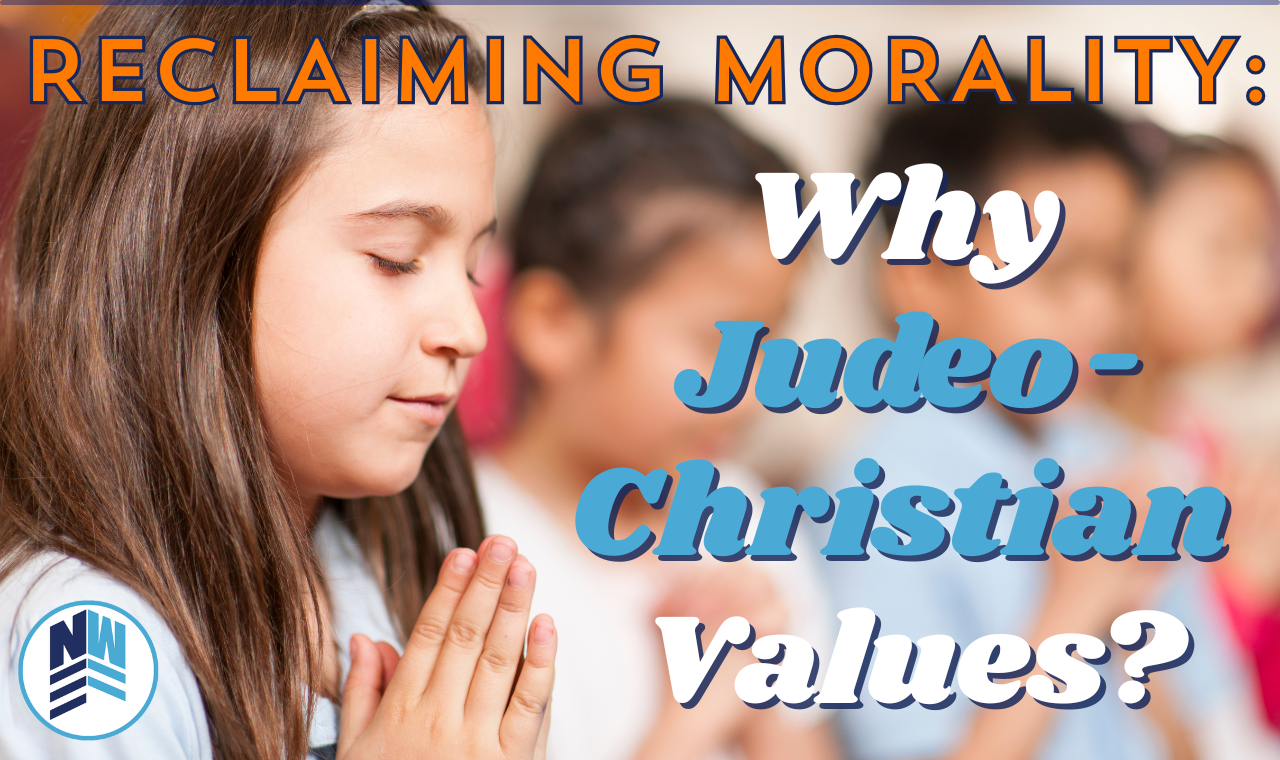
Many believe that public education is neutral: amoral, thoroughly secularized, and untouched by questions of right and wrong. However, the question is not if children are being shaped morally, but how. Every lesson, every policy, every cultural influence in the classroom carries moral weight. For much of American history, that answer was obvious. Schools were rooted in the Judeo-Christian tradition, cultivating both intellect and character.
Along the way, we lost that clarity. If we want students who are knowledgeable, virtuous, and resilient, we must reclaim morality in education—and return to the principles that once made our schools and nation strong.
The Power of a Judeo-Christian Moral Core
Back in the late 18th and early 19th centuries, Noah Webster wasn’t just defining words; he was shaping souls. His American Dictionary is filled with biblical definitions, emphasizing social order, submission to authority, and reverence for God —virtues essential to a stable society.
Webster also produced his own Bible edition and wrote Value of the Bible and Excellence of the Christian Religion in defense of Christianity.
These weren’t academic exercises. They grounded young minds in clarity, purpose, and moral vision. That kind of foundation instills character, not by force, but by example.
Pillars of a Moral Education
Noah Webster understood that a strong education required more than reading, writing, and arithmetic. Moral grounding is the glue that holds society together. Education is a valuable tool for instilling morality in every area of life. The two should always go hand in hand for a stable, thriving culture.
Instruction
Instruction should do more than merely transmit facts from teacher to student. Teaching children to read isn’t just about literacy; it enables them to engage with Scripture and moral truth. When education connects skill with virtue, it prepares students for both life and citizenship.
The U.S. Department of Education recognizes the vital importance of character development as an integral part of a child’s education. “Character education teaches the habits of thought and deed that help people live and work together as families, friends, neighbors, communities, and nations.”
Unfortunately, that recognition has rarely translated into practice. For decades, character education has been sidelined, leaving generations of children without the moral foundation needed to anchor their learning in wisdom and ethical responsibility.
Parental Engagement
Research has shown that parental engagement is a crucial factor in academic success. However, it’s also vital for a child’s ethical compass and moral foundation. Education starts at home long before a child reaches school age. Schools may provide structure, but families shape character. When parents are active partners in their child’s education, the lessons of virtue are reinforced at home and strengthened in the classroom.
Cheri J. Meiners, M.ED. suggests that “we can’t expect them [children] to merely observe and adopt the character traits and maturity that we’d like them to develop. A consistent and thorough teaching of ethical behavior is critical to shaping character.”
While regaining character education in schools should be a priority, parents are, by far, the most influential individuals in a child’s life, for good or for bad. It’s vital that, as parents, we both model and teach good character and morality to our children. It’s our most significant responsibility, and one that we should take seriously.
America’s youth are America’s future. Parents must deliberately model and teach morality. We cannot leave this to chance; our children’s future, and the future of our nation, depends on it.
Ethics and Morality
Ethics and moral values form the backbone of society. Knowledge is power, and if that power is without wisdom and moral clarity, it can be dangerous.
Character education, rooted in Judeo-Christian principles, ensures that students not only know how to think but also how to live right.
Webster’s 1828 dictionary defines faith as “the assent of the mind to the truth of a proposition advanced by another; belief, or probable evidence of any kind.”
Webster also describes morality as “the doctrine or system of moral duties, or the duties of men in their social character; ethics,” or “the practice of the moral duties; virtue.”
Belief and morality are inseparable. What one believes inevitably shapes how one lives. Without a clear understanding of faith and morality, students risk misapplying their knowledge throughout life.
The Government
The government plays a role in ensuring that schools serve the public good. But the Founders understood that self-government only works when citizens are virtuous. John Adams pointed to this truth when he stated, “Our constitution was made only for a moral and religious people. It is wholly inadequate to the government of any other.”
Historically, the government has had very little influence over education. However, that has changed, and today the government is as involved in education as is the church or the family.
This means that the government has a significant responsibility to uphold and instill values that have historically belonged to the family and church. To produce productive citizens of strong character, civil authorities, policymakers, and educators must embrace their role in instilling these vital principles in their students.
Even business-minded voices recognize this. Strategic EdTech points out, “Educators typically take issue when their schools are called businesses…But we are, in fact, businesses. Rather than deny reality, we should seek to embrace what other enterprises have done to succeed and incorporate them, where possible, into making our service offerings better meet the needs (current and future) of our customers.”
While some may take issue with this perspective, it’s a valid one to consider. If schools are, in effect, preparing the nation’s future workforce, then we cannot ignore the importance of moral formation. No business would knowingly invest in unethical or unprincipled employees—nor should our government be content to cultivate citizens without character.
It’s time for the civil governments (local, state, and federal) to recognize the vital importance of regaining a Judeo-Christian foundation for the morality and ethics of our students.
Resources and Priorities
Fiscal spending always reveals priorities, and education is no different. When funding emphasizes programs and materials that build character, rather than reducing schooling to test scores, schools are more likely to form well-rounded, resilient students. Academic success matters, but moral grounding must be pursued with equal urgency.
Parents, educators, churches, community organizations, and government all share responsibility for how resources are allocated. Whether through school board involvement, supporting school choice, or simply educating our own children, each of us has a voice.
The question is whether we will use it to strengthen the moral foundation of the next generation.
At A Glance
So, what’s the bottom line here? What does a strong Judeo-Christian foundation in education mean for students?
- Roots give resilience: Students grounded in a moral tradition are more likely to navigate ethical dilemmas with conviction, not just compliance.
- Character supersedes credentials: As we move beyond testing and grades, cultivating virtues such as honesty, empathy, and humility matters for lifelong success.
- Community & belonging: The Judeo-Christian ethic has historically cemented community bonds. Restoring it strengthens civic life, something our government must prioritize again.
- Parental partnership: Inviting families into moral instruction, as in Webster’s vision, reinforces learning beyond the school walls.
- Hope-driven education: Purpose and transcendent meaning give students hope, a powerful motivator for learning and growth.
It Matters
If we want stronger students, stronger families, resilient communities, and responsible citizens, then we must do more than improve academic technique. We must reclaim morality in education and return to the Judeo-Christian foundation that once made American schools a wellspring of both knowledge and virtue.
Learn more about reclaiming education and culture by downloading our new e-book Reclaiming Edcuation and Culture