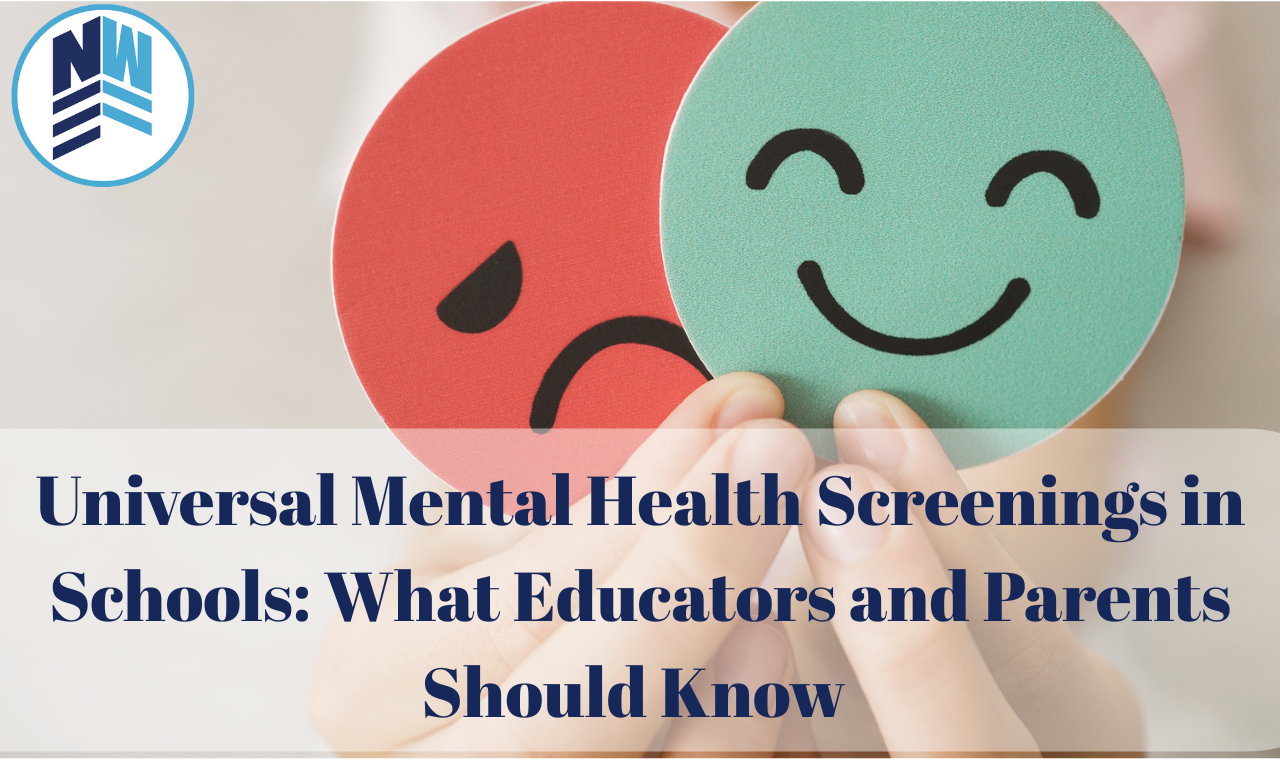
“Mental health screening in public schools has grown in recent years. As of 2021, nearly one-third of American schools reported that their district mandated student screening. While widespread implementation has occurred somewhat inconspicuously, empirical evidence has shown that universal mental health screening does not improve clinical or academic outcomes and indeed has harmful effects.”
This statement from the Manhattan Institute highlights one of the key issues facing schools today.
Student mental health has become one of the most pressing issues in K–12 education. As rates of anxiety, depression, and behavioral challenges among students continue to rise, educators and policymakers are increasingly looking to schools for solutions.
One approach now at the center of a growing national conversation is universal mental-health screening in schools, a policy shift that has gained new attention following a recent statewide mandate in Illinois.
Overview: Illinois’ New Universal Screening Law
In 2025, Illinois passed the most comprehensive piece of legislation nationwide concerning universal annual mental‑health screenings for all public‑school students. The new law requires school districts to offer annual mental health screenings to all students in grades 3-12.
Under this legislation, districts must provide screenings at least once a year using screening tools provided to school districts at no cost, though implementation and follow-up responsibilities remain local. The Illinois State Board of Education will issue model procedures and guidance for implementation.
Other states have passed related or supportive legislation, and other state policies encourage or permit schools to implement mental‑health screening or early identification practices, but none match the scope of Illinois’ universal screening mandate.
Supporters of the Illinois policy emphasize that schools are often the frontline setting where youth spend most of their day, making them a logical place to detect and respond to signs of struggle earlier.
What Mental-Health Screening Actually Entails
Mental-health screening is typically a brief assessment, often a questionnaire, that asks students about emotional states, behaviors, or symptoms associated with conditions like anxiety or depression.
However, an important distinction is that the screening is not the same as a clinical diagnosis. Rather, it is intended to identify individuals who might benefit from further evaluation or support.
Screening tools can vary, but many are designed to be age-appropriate and to function similarly to other school health checks (such as vision and hearing screenings). The goal is to flag potential concerns so that educators and support staff can follow up with appropriate interventions or referrals.
Research and Evidence: What We Know (and Don’t Know)
While universal mental health screening may seem intuitively helpful, the evidence on its effectiveness is mixed or limited.
A recent issue brief from the Manhattan Institute, authored by Carolyn D. Gorman, provides a critical assessment of universal mental-health screening in schools. That analysis notes that while screening efforts have become more common, there is currently no strong evidence that universal screening in schools reduces the prevalence of mental health conditions or improves academic outcomes.
It also raises concerns about false positives, ethical and practical challenges, and the fact that many screening tools cannot reliably diagnose a condition without further clinical assessment.
Research reviews outside of the Manhattan Institute analysis support the notion that routine screening does not automatically translate into better mental health outcomes. Reviews of screening for common conditions like anxiety, depression, and suicide risk in community settings have found insufficient evidence that screening alone leads to better or more sustainable outcomes than not screening.
At the same time, proponents argue that universal screening helps normalize conversations around mental health, reduces stigma, and can identify students who may otherwise slip through the cracks, especially in communities where access to mental health professionals and services is limited.
Challenges for Schools
Even with solid intentions, implementing universal mental health screening presents logistical and ethical questions for educators and districts:
- Resource Constraints: Many schools grapple with shortages of counselors, psychologists, and social workers to administer screenings and provide follow-up care.
- Parental Consent and Privacy: While Illinois law allows opt-outs, issues around data privacy, how information is stored, and who sees it remain a concern for many families.
- Interpretation and Follow-Up: Screening can identify potential concerns, but it does not provide a diagnosis. Without clear pathways to clinical evaluation and follow-up services, flagged results may not lead to meaningful support.
- Risk of Misclassification: Behavioral surveys can sometimes mislabel normal developmental experiences as pathological without a proper professional context.
A Broader Strategy for Student Mental Health
To address many critics’ concerns, some suggest that universal screening should not exist in isolation. Schools that seek to improve mental-health outcomes must consider comprehensive systems of support that include:
- Professional Capacity: Hiring and training more qualified counselors, social workers, and psychologists.
- Educator Training: Building teacher and staff awareness around early warning signs and response protocols.
- Family Engagement: Keeping parents informed and involved in their children’s well-being, from consent processes to follow-up care.
- Evidence-Based Interventions: Pairing identification with quality support services, both in schools and through community partnerships.
National and local research consistently points to the value of multi-tiered systems of support that combine prevention, early intervention, and targeted services, rather than relying solely on assessment.
What It All Means
In their assessment of the current state of universal mental health screenings in schools, the Manhattan Institute concludes, “Universal mental health screenings are ineffective and harmful; states should prohibit their use in schools. To the extent that individual or targeted screening occurs in school settings, states should introduce meaningful guardrails, such as greater transparency and mechanisms for accountability.”
The Institute continues, “Transparency around school-based screening is particularly important …States should encourage or require districts to publicly share information…Absent these measures, schools should forgo mental health screening.”
While most of us, parents and teachers alike, can agree that the mental health of our students matters, we must understand that this is a nuanced and difficult issue for which there is no conclusive, effective, universal response – yet.
For parents and educators, the takeaway is straightforward: advocate for mental health initiatives that go beyond questionnaires, understand the limitations of screening tools, and work collaboratively with schools to ensure that students flagged for support actually receive the care they need.
By approaching mental health as a shared responsibility and layered system, communities can help students thrive academically, emotionally, and socially, even as the conversation around universal screening continues to evolve.