In our reading series, we’ve explored the building blocks of literacy, from phonological awareness to phonics. Phonics teaches children how letters and letter patterns represent sounds, giving them tools to decode words confidently rather than guess or memorize
Phonics is foundational.
Now we arrive at a turning point in the reading journey: fluency.
Fluency is often misunderstood as simply “reading fast.” It’s actually far richer and more important than speed, and most importantly, fluency frees the brain to focus on understanding.
Let’s examine fluency and what it means for your young reader!
What Is Reading Fluency?
Reading fluency is simply the ability to read smoothly, accurately, and with expression. It may sound simple, but these skills are what launch a child from a struggling beginner to an adventurous, confident reader.
Researchers at the National Reading Panel described fluency as a “critical component of skilled reading,” noting that fluent readers are better positioned to understand and remember what they read.
A fluent reader:
- Can recognize words right away
- Doesn’t have to sound out every word
- Reads in a natural, flowing rhythm
- Uses the right tone and expression for the story
- Has brainpower left over to actually understand what they’re reading
When a child is fluent, reading stops feeling like hard work. The tricky mechanics fade into the background, allowing their mind to focus on enjoying and understanding the story.
Why Fluency Matters So Much
Fluency is not an optional add-on; it’s essential because our brains can only hold so much at once. If a child is spending all their energy figuring out the words, there’s little left for comprehension.
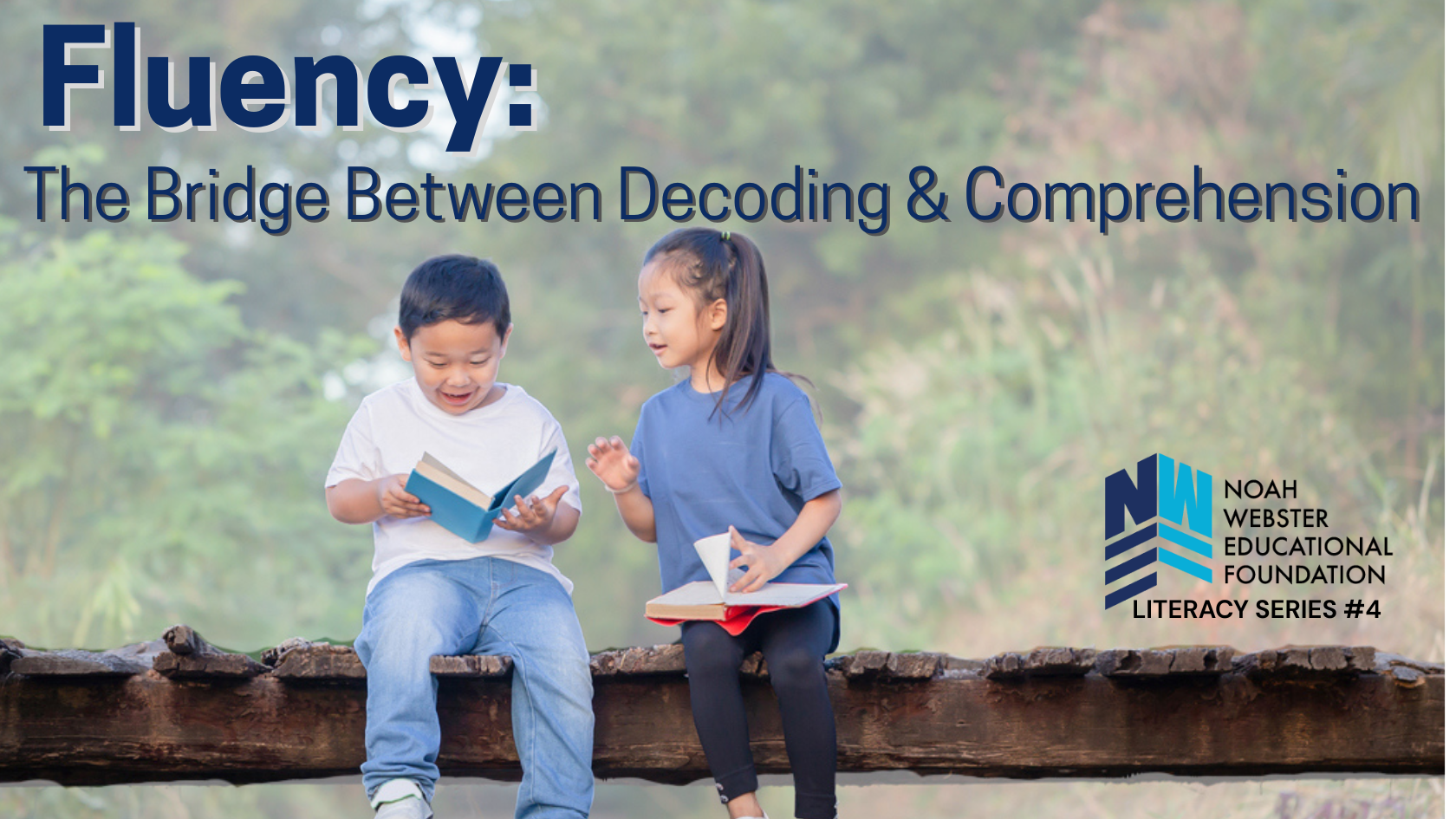
Imagine two young girls sitting side by side, each with a new library book. Jenny slowly sounds out each word, pausing every few words and forgetting what she just read. Meanwhile, her friend Beth reads the same passage smoothly, almost like she’s telling a story. Because Beth doesn’t have to work so hard on the words, she can focus on the meaning and enjoy the story. Jenny, on the other hand, feels frustrated and a little lost.
The difference isn’t intelligence — it’s fluency.
Reading scientist Timothy Rasinski explains that fluency acts as a gateway to comprehension because “reading fluency is the essential link between word recognition at one end of the spectrum and reading comprehension at the other.”
This aligns perfectly with what parents often observe. Children who struggle with fluency may:
- Avoid reading
- Lose their place frequently
- Forget what they just read
- Struggle to answer comprehension questions
- Sound robotic or choppy
These are not comprehension problems alone; they are often fluency problems.
The Three Pillars of Fluency
Fluency rests on three interconnected elements: accuracy, effortless word recognition, and expression.
1. Accuracy
Children can’t be fluent if they aren’t reading words correctly. Accuracy grows from strong phonics instruction and repeated exposure to decodable text.
As Literacyhow notes, “The ultimate goal of phonics instruction is to ensure that students can read each and every word accurately and automatically.”
2. Effortless word recognition
This is when a child sees a word and knows it instantly. Decoding becomes so easy that it frees their brain to focus on meaning.
Effortless recognition develops through:
- Repeated reading
- Exposure to controlled text
- Practice with connected passages
- Gradual expansion of sight vocabulary
3. Prosody (Expression)
Prosody is the rhythm, phrasing, and tone of reading. Prosody reflects understanding.
“Developing prosodic skills not only enhances comprehension in our students, but it also improves overall language understanding and reading fluency,” the Cooperative Educational Services notes. “Prosody in reading will help students achieve a deeper connection with what they are reading.”
Prosody includes:
- Pausing at punctuation
- Adjusting voice for dialogue
- Emphasizing important words
- Reading with natural phrasing
A reader who has mastered this skill will bring the meaning of the words to life!
How Fluency Develops
Fluency does not appear overnight. It emerges gradually with effort and instruction.
First, reading is laborious and slow, and decoding is tedious and difficult. Over time, accuracy improves, but reading itself remains choppy and erratic. Slowly, the reader becomes more confident, and as their skills grow, word recognition becomes more automatic. By the time they are a fluent reader, they can read smoothly with expression and strong comprehension.
Importantly, fluency cannot be rushed. Prioritizing speed over accuracy can actually harm reading development.
Building Fluency
There are lots of fun, simple ways to help children become fluent readers. Repetition, reading aloud, and echoing are all effective.
Imagine Jenny reading the same short story a few times. Each time, she recognizes more words and starts feeling proud. Then Beth reads aloud with expression, showing how a sentence can really “sound like” the story, and Jenny echoes her, practicing rhythm and flow. Sometimes they read together, laughing at funny parts and enjoying the story together. And when the books match what they already know from phonics, guessing disappears, and reading feels almost effortless.
Fluency isn’t built by exposure alone — it grows through consistent, guided practice grounded in strong decoding skills.
How Fluency Connects to the Bigger Literacy Picture
Fluency sits at a critical junction in the reading process:
- Phonological awareness prepares the brain for sound structure
- Phonics teaches decoding
- Fluency automates decoding and enables meaning
- Comprehension becomes the ultimate goal
Without fluency, comprehension is fragile. With fluency, comprehension can flourish. That’s why fluency deserves focused attention — not as an isolated skill, but as an essential milestone.
An Encouraging Step for Parents
Fluency is the moment reading starts to feel natural. Effort gives way to flow, decoding becomes automatic, and meaning comes into focus.
For parents, this stage is exciting: the hesitant reader who once struggled through each word begins to read smoothly, confidently, and with expression. Reading shifts from labor to enjoyment — and that changes everything.
Once fluency is established, comprehension is the next stop. But remember: comprehension rests on the bridge that fluency provides. Build the bridge well, and understanding can travel freely.