Throughout our literacy series, we’ve been building the foundation of reading piece by piece. We started by examining phonological awareness (hearing the sounds in words) and then moved to phonics (connecting those sounds to letters). We’ve explored vocabulary (knowing what words mean), and we’ve looked at fluency (reading smoothly and automatically).
Each of these skills plays a crucial role in learning to read, but they are not the final destination. They are leading somewhere; they lead to reading comprehension.
Simply put, comprehension is the process of making meaning from text. It’s the moment when reading moves beyond sounding out words and becomes something deeper—understanding, thinking, remembering, and connecting ideas.
In other words, comprehension is the goal of literacy.
When parents say they want their child to be a strong reader, what they usually mean is that they want their child to understand what they read. They want their child to follow a story, grasp an argument, learn from a science book, or enjoy a novel.
But comprehension isn’t just one skill. It’s actually a combination of several mental abilities working together.
A child’s reading comprehension level is a huge predictor of their future success or failure in life, and it’s a skill that every child should master.
What Comprehension Really Involves
Every parent knows that moment when they see it! A child is reading along, slowly sounding out the words, and then suddenly something clicks. The story starts to make sense. The characters feel real. The events connect.
“Comprehension is the reason for reading,” notes Reading Rockets. “If readers can read the words but do not understand or connect to what they are reading, they are not really reading. Good readers are both purposeful and active, and have the skills to absorb what they read, analyze it, make sense of it, and make it their own.”
That moment when the words on the page become meaningful in a child’s mind is what we call reading comprehension.
Several important abilities are involved in that process.
Understanding
The first step is simple understanding: grasping what the text is saying on a basic level.
If a story says, “The dog ran through the yard chasing a ball,” comprehension means that the reader can answer these questions:
- Who is running?
- What are they chasing?
- Where are they?
This might seem obvious, but basic understanding depends heavily on two things: accurate word reading and vocabulary knowledge.
If a child struggles to read the word chasing, or doesn’t know what it means, comprehension immediately breaks down.
Inference
Good readers don’t just understand what is directly written; they also figure out what the author is implying.
This is called inference, and readers do it constantly.
For instance, suppose we read, “Jacob dropped his backpack on the floor and groaned when he saw the math worksheet.”
The sentence never states that Jacob dislikes math, but most readers understand that he probably does.
Inference allows the reader to draw conclusions from the text, using clues and everyday knowledge.
Memory
Reading comprehension also depends on memory.
When we read, we need to remember the information that came earlier in the text, chapter, or book. Characters, events, facts, and ideas build on each other.
If a reader forgets key details, the story or explanation quickly becomes confusing.
This is one reason why reading fluency matters so much. When children read slowly and struggle through every word, their working memory fills up with the effort of decoding. There’s less mental space left for remembering what the text actually said.
Logic
Readers also use logic to make sense of what they’re reading.
They track cause and effect. They follow arguments. They notice when a problem appears and how it gets solved.
For example, if a nonfiction book explains how plants grow, readers need to follow a sequence of steps: sunlight, water, nutrients, and time.
Or in a story, readers might notice that a character’s decision early on leads to consequences later.
This logical thinking helps readers connect ideas rather than see sentences as isolated pieces.
Background Knowledge
One of the most powerful pieces of comprehension is something many people overlook: background knowledge.
Readers understand a text better when they already have some background knowledge of the topic.
Imagine two kids reading a short article about the moon landing. One child has watched documentaries about space and knows a little about astronauts. The other child has never heard of NASA.
Which child will understand the article more easily?
Almost always, it’s the one who already has some knowledge of the topic.
This is why reading a variety of topics, having family conversations, watching documentaries, visiting museums, and everyday curiosity all matter. The more children learn about the world, the easier it becomes for them to understand what they read. In other words, knowledge builds knowledge.
Why the Foundations Matter So Much
Here’s the part that often surprises parents.
Comprehension cannot exist without the foundations of reading beneath it. A child cannot focus on what a text means if their brain is still trying to figure out what the words say.
Think about what happens when you try to read something written in a language you barely know. Even if you recognize a few words, your brain is working so hard to decode them that it’s difficult to understand the overall message.
The same thing happens when children are still struggling with basic reading skills.
If a child is:
- sounding out every word slowly
• unsure what many of the words mean
• feeling like reading is hard labor
Then their brain has very little energy left for comprehension. That’s why the four foundational reading skills we’ve discussed in this series matter so much:
- Phonological awareness helps children hear the sounds in language.
- Phonics teaches them how letters represent those sounds.
- Vocabulary ensures they know what words actually mean.
- Fluency allows them to read smoothly and automatically.
When these skills become strong, something important happens: reading becomes automatic enough that the brain can start focusing on meaning.
Instead of struggling through every word, children begin to think about the story, the ideas, and the information they’re encountering.
That’s when comprehension really takes off.
How Parents Can Support Comprehension
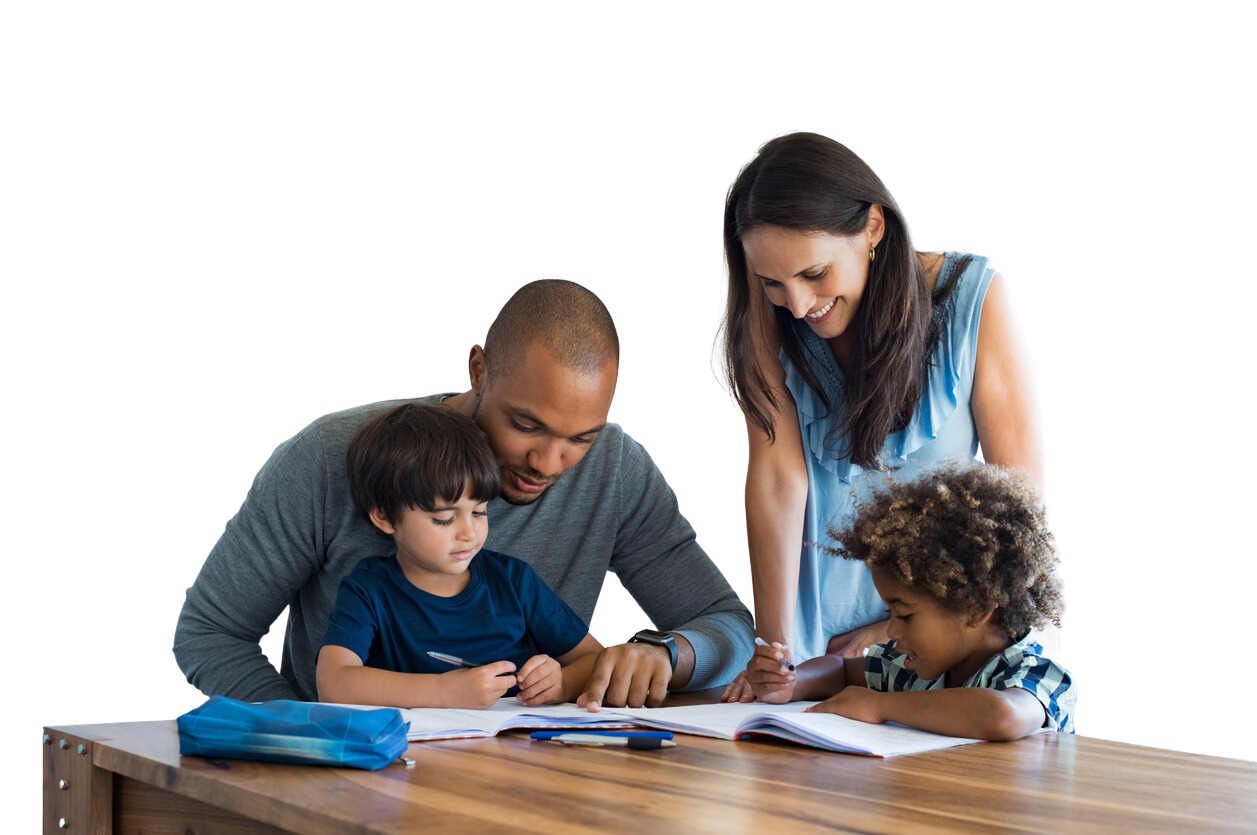
The good news is that parents play a powerful role in helping children grow into thoughtful readers.
And the strategies are often simpler than you might think.
- Read aloud often
- Talk about what you read
- Encourage a variety of reading
- Keep strengthening the basics
Even as comprehension develops, strong phonics, vocabulary, and fluency continue to support deeper and deeper understanding.
Where Reading Comes Alive
At the end of the day, reading isn’t just about pronouncing words correctly. It’s about understanding ideas. It’s about getting lost in a story, learning something new, or thinking deeply about a question.
Comprehension is the moment when the words on the page turn into meaning in the mind.
But that moment doesn’t happen by accident. It grows from the strong foundations beneath it. When children build those foundations carefully—sound by sound, word by word, sentence by sentence—reading eventually becomes what it was always meant to be:
Not just decoding symbols on a page, but discovering meaning, knowledge, and imagination through text.