
Key Takeaways
- Early warning signs like reading avoidance, weak fluency, and poor comprehension can signal underlying literacy struggles.
- Daily reading routines and phonics practice help children build stronger decoding, fluency, and comprehension skills.
- Positive reinforcement and meaningful reading experiences can improve both literacy skills and reading confidence.
- Parents play a critical role in identifying reading challenges early and supporting long-term literacy growth at home.
5 Tips Every Parent Needs to Know
Many children struggle with reading, and parents often don’t notice the signs until it has begun to affect their confidence and school performance. However, it’s a serious issue in our current education system. According to the National Assessment of Educational Progress, roughly one-third of American fourth graders read below proficiency.
Today, we’ll examine the key warning signs of reading difficulties that you, as a parent, can watch for and provide practical strategies you can use to help your child improve fluency, comprehension, and overall literacy skills.
Reading is more than just decoding words on a page; it’s a gateway to learning, imagination, and lifelong success. Yet for some children, even early grade-level reading can feel like a frustrating uphill climb.
Recognizing these challenges early and knowing how to respond can make all the difference in helping your child not just keep up, but thrive in school and in life!
Warning Signs That Your Child May Be Struggling
It’s not always obvious when a child is struggling with reading, but there are several red flags parents should watch for:
- Difficulty Recognizing Words
A child who frequently guesses words instead of sounding them out, or one who can’t recall familiar words, may be struggling with basic decoding skills.
When a child relies on decoding, they end up guessing from pictures or context clues rather than sounding words out. Often, they end up memorizing words rather than actually understanding the reading process. With this pattern, learning new words is difficult. Over time, fluency and comprehension suffer. The child’s brain is focused on identifying individual words rather than understanding the story or information.
- Slow or Choppy Reading
If reading aloud feels laborious, with frequent pauses or mispronunciations, your child may have difficulties with fluency. Fluency is crucial because it allows the brain to focus on comprehension rather than just decoding words.
When a child lacks fluency, reading can sound slow, robotic, or overly cautious. They may stop frequently to decode simple words, lose their place on the page, or read in a flat, expressionless tone. This isn’t just about speed — it’s about automaticity. Fluent readers recognize most words instantly, which frees up mental energy to think about meaning, make connections, and enjoy the story. Struggling readers, on the other hand, often use so much effort sounding out words that little capacity remains for understanding what they’ve read.
- Reading Avoidance
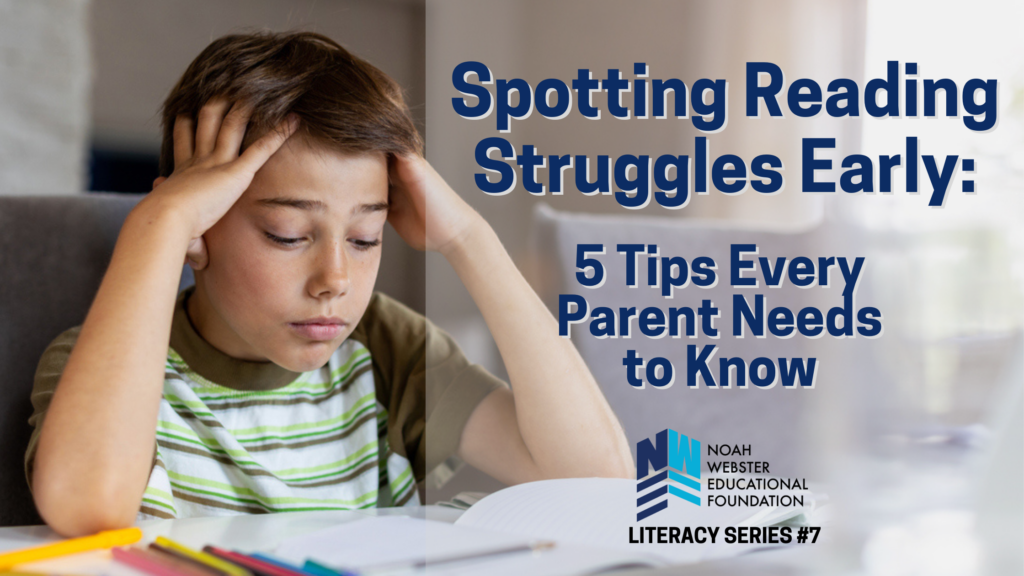
Children who struggle often try to avoid reading tasks. Avoidance is often one of the clearest and most overlooked warning signs of a struggling reader. A child who suddenly needs a snack every time it’s reading time, claims to be tired, or insists they “hate books” may not be lazy or defiant, but is trying to escape something that feels embarrassing or overwhelming. Repeated frustration can chip away at a child’s confidence, leading to anxiety about schoolwork or the belief that they simply “aren’t good at reading.” If your child consistently resists reading at home or becomes easily frustrated when asked to read aloud, it could indicate underlying literacy challenges.
- Problems with Comprehension
Reading comprehension is the ultimate goal of literacy, yet many children struggle with it. A child may sound out words accurately and even read at a decent pace, yet still not understand what it means. You might notice blank stares when you ask, “What was that story about?” Maybe they give vague responses or isolated details, but they can’t explain the main idea or why events happened. This often signals that they’re focusing on decoding instead of understanding, or that vocabulary gaps are limiting comprehension. If your child struggles to summarize a story, answer questions about it, or connect it to prior knowledge, their comprehension skills may need extra support.
- Weak Spelling or Writing Skills
Literacy is interconnected; reading and writing draw from the same foundation of language skills. Children who struggle to spell common words or organize their writing often face reading challenges as well.
You might notice invented spellings that don’t align with letter sounds, extremely brief written responses, or difficulty organizing thoughts into complete sentences. While early spelling mistakes are developmentally normal, persistent struggles beyond the expected grade level may indicate underlying literacy gaps that need attention.
Recognizing these warning signs early is crucial. Research shows that early intervention significantly increases the likelihood of reading success, while delays can make catching up more difficult.
Strategies to Help Your Child Improve Reading Skills
Once you notice these warning signs, there are several practical strategies parents can use to help their child develop stronger reading skills:
- Daily Reading Routine
One of the simplest yet most effective strategies is to read together daily. Even 15–20 minutes of shared reading can improve vocabulary, comprehension, and fluency. Let your child choose books that interest them to make reading enjoyable rather than a chore. - Phonics and Decoding Practice
Phonics, the understanding of the relationship between letters and sounds, is foundational for reading. Parents can help by practicing letter sounds, blending exercises, and sight word recognition. Resources like Reading Rockets offer free activities and guides for reinforcing phonics skills at home. - Model Reading Behavior
Children emulate the adults around them. Let your child see you read. Reading doesn’t have to be confined to books. Discuss what you are reading and why it’s interesting. This will model both the practical and enjoyable aspects of reading. - Use Technology Wisely
Educational apps and audiobooks can supplement reading instruction. Programs that highlight words as they are read aloud can help struggling readers connect sounds to letters and words. Screen time should be limited and structured to reinforce learning rather than replace it. - Incorporate Reading into Daily Life
Label household items, read signs while driving, follow a recipe together, or discuss instructions for a game. Even encouraging kids to find rhymes around the house as they work can help them build neural connections. Making reading a natural part of daily life reinforces literacy skills and helps children see practical applications. - Provide Positive Feedback and Celebrate Progress
Reading struggles can be discouraging. Celebrate small victories, whether it’s correctly sounding out a word or finishing a chapter. Positive reinforcement builds confidence, which is closely tied to literacy growth.
A Parent’s Role in Literacy
Ultimately, your involvement as a parent can make a lasting difference. Children are far more likely to persevere when they feel supported, understood, and encouraged at home. Struggling readers are not less intelligent; they simply need clear instruction, steady practice, and the reassurance that growth takes time.
The good news is that reading struggles are not destiny. With early attention, consistent support, and a willingness to address problems head-on, most children can make meaningful progress. Today’s effort can shape your child’s academic confidence and future success for years to come.
By paying attention to early warning signs and responding with patience and purpose, you’re not just helping your child improve a school subject. You’re helping them build a foundation for lifelong learning, independence, and confidence — one page at a time.