
Key Takeaways
- Children learn work ethic primarily by observing parents, making modeling behavior more powerful than instruction alone.
- Consistent responsibility at home helps children develop traits like accountability, resilience, and independence.
- Shared effort in family tasks strengthens relationships and reduces entitlement while building teamwork.
- A strong parental example of diligence and responsibility can positively influence children into adulthood and benefit society more broadly.
A tired father walked in the front door after a long day at work, 7 to 5. He pulled off his coat and boots and sank into the living room couch, glad to close his eyes for a moment.
Within minutes, he noticed the woodpile was low. He was thankful for the cheap heat of the wood stove, but keeping those hungry flames fed is a chore. He sighed, stood up slowly, pulled his coat and boots back on, and headed out into the cold.
What he didn’t know was that his three-year-old son had been watching from the kitchen. As his father trudged out the door, the little man put down his blocks and ran to find his coat and tiny boots. Two minutes later, Dad looked up in surprise as a small shadow appeared at his side, carefully gathering toddler-sized sticks in his arms, just as he’d seen Dad do a hundred times.
I watched from the window as my husband helped our son pick out his sticks and balance the little pile in his arms.
Let’s be honest: kids don’t absorb much from lectures. They soak up what they see, from how we carry ourselves to how we handle our responsibilities. They’re watching and copying our every move, even when we don’t notice.
That’s why teaching work ethic starts with us. When parents consistently live out hard work and responsibility, the benefits reach beyond the family: to the child, the household, and in the end, society.
Why Modeling Matters
Kids are tiny observers, wired to imitate. They learn far more from our actions than from our words.
“Even at a very young age, children imitate their parents’ behavior,” Parenting Counts explains. “Parent and caregiver behavior present powerful lessons to a child and leave impressions on the developing mind. Children store in their minds both positive and negative images that may be imitated or tested at a later time.”
When your child sees you make dinner, work in the yard, pay the bills without complaint, or work through your to-do list after a long day, they’re learning diligence, follow-through and resilience.
The Ripple Effects: Child, Family, Society
Raising responsible, resilient children helps more than that one little person. It is likely to set off a ripple effect that lasts for years. Parents who model good habits and steady effort have real influence on the world around them.
The child:
Children who regularly see a strong work ethic and dependable habits tend to build strength of character and take up those habits themselves.
Kids who grow up doing real chores gain time-management skills, accountability and problem-solving. (We look closer at that link in how chores at home can supplement education.)
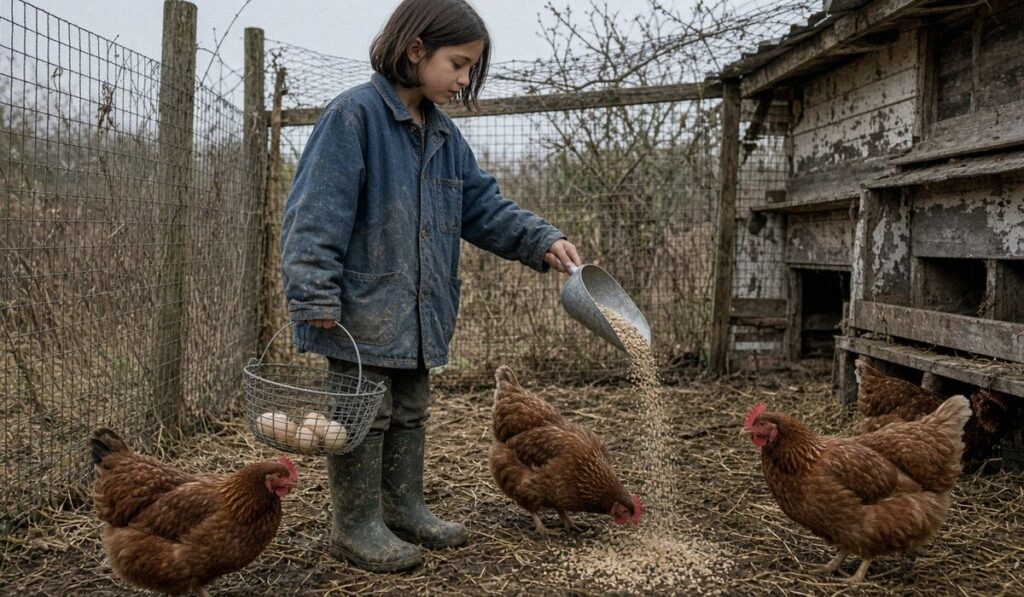
“Research suggests there are benefits to including chores in a child’s routine as early as age 3,” the American Academy of Child & Adolescent Psychiatry tells us. “Children who do chores may exhibit higher self-esteem, be more responsible, and be better equipped to deal with frustration, adversity, and delayed gratification. These skills can lead to greater success in school, work, and relationships.”
Kids learn by watching. Then they copy what they see. They find out what responsibility feels like, not just what it means.
The family:
When parents show that household tasks matter, whether it’s folding laundry or keeping up the yard, children learn that everyone pitches in. Pulling together as a family builds a sense of belonging and accomplishment, and it strengthens family bonds.
The National Association for Child Development explains, “Learning to do things that don’t appear to directly help you is vitally important. Those children who learn to contribute and help others or their family are generally not going to be those who grow up feeling entitled. Doing things for the family helps connect the child to the family and helps provide some needed perspective.”
When kids learn from our example, we’re showing them unity, not just telling them about it.
For society at large:
Children raised with a strong work ethic grow into adults who contribute responsibly.
“A good work ethic is exemplified by the basics, including: reliability, dedication, productivity, cooperation, and strength of character,” the National Association for Child Development notes. “…Many parents neglect to realize that one of our jobs as parents is to raise our children to be functional adults, responsible, competent members of society, and perhaps parents themselves, who will need all the tools they can get to help the next generation succeed.”
A steady inner sense of duty and effort tends to produce dependable employees, engaged citizens, and future parents who pass the habit on. That kind of multiplier benefits all of us.
How to Model Work Ethic on Purpose
- Share your own experiences.
Include the kids when you talk about your workday. Tell them about the challenges you faced and how you handled them. Don’t boast. Just be honest and open. - Start chores early, and follow through.
Even a 2-year-old can help unload the dishwasher (once the sharp and breakable items are out, of course). A 3-year-old can clear the table, and a 5-year-old can carry their laundry to the wash and make their own bed. Most young children are eager to help. Feed that desire by working alongside them, so chore time becomes time together. - Be the dependable anchor.
Don’t model what you don’t want your kids to practice. If you want them to be on time, be on time yourself. Put your own priorities where you want your children to put theirs. - Talk about money and effort.
Have the honest conversation about the money tree: it doesn’t exist for you, and it doesn’t exist for them. Talk plainly about needs and wants, and help them see how hard work and personal responsibility shape money decisions. Once they’re old enough, that can mean helping them find a part-time job or paying them yourself for specific jobs around the house. - Reflect on mistakes, not just wins.
Perfection isn’t the goal, for your kids or for you. Own your mistakes and use them to build character, resilience and creative problem-solving. Whether the failure is yours or theirs, honesty will go a long way toward turning a negative into a positive.
Dads have a special part to play here. For more ideas, see five ways dads can take the lead in family learning.
The Long-Term Vision
Think of your child as a sponge that soaks up behavior more than information. Each time you take care of your responsibilities, no matter how ordinary, your child is watching and taking it in.
You can’t force responsibility. Children see it, and then they choose it. The work ethic you model may be the tool that helps your child thrive, your family prosper, and your community flourish.