
“Character is higher than intellect.”
Ralph Waldo Emerson.
12-year-old Michael froze in frustration on a soccer field. His team was down by two goals, and he’d just missed an easy shot. His face was red, not from running but from embarrassment. His coach jogged over, put a hand on his shoulder, and simply said, “Take the next right step.”
Michael pulled himself together and rejoined the play. Though his team ultimately lost, Michael’s confidence soared as he realized he’d finished the game with grit he didn’t know he had.
That’s the power of character learned through authentic experiences.
The bottom line is that if we don’t teach our children character, the world will teach it for us — and not always well.
There’s an old truth our ancestors understood far better than many of us do: kids need more than academic knowledge to thrive. They need resilience, humility, patience, and responsibility.
Our academic climate stresses over testing, grades, socialization, college prep, and extracurriculars, and who our children are is often forgotten in the focus on what they are accomplishing.
Character matters.
And oddly enough, some of the best training grounds for these virtues aren’t classrooms at all. They’re soccer fields, violin lessons, woodworking benches, robotics clubs, and backyard projects.
Why Character Education Matters
The Cambridge Dictionary defines character as “the quality of being determined and able to deal with difficult situations.”
In other words, character is who you are under pressure. When everything is going wrong, when you aren’t sure what to do, or you’re faced with a difficult decision, what you choose to do matters – and is determined by your character.
Character isn’t just nice to have; it’s foundational. Character education empowers students not only to know right and wrong, but to want to act on core ethical values like responsibility and respect. In fact, moral formation is inseparable from educating the whole child.
Long-term character development helps in ways that academics alone can’t match.
Research shows that participating in structured extracurriculars is positively correlated with social-emotional skills such as self-control, resilience, and teamwork. One study even found that extracurricular activities “…have a positive relationship with the development of student character education …”
So what does that mean for the average parent, especially the ones juggling school schedules, laundry piles, homework, grocery runs, and a child who suddenly needs help building a cardboard Iron Man suit at 9:47 p.m.?
Good news: it means opportunities for character training are everywhere.
Let’s break it down.
Sports: The Ultimate Bootcamp for Grit (and Humility)
Sports are basically character training disguised as recreation. Kids think they’re learning how to dribble a ball. Parents know they’re learning:
- How to lose without melting down
- How to win without becoming a tiny tyrant
- How to push through discomfort
- How to work with other humans (a life skill even many adults lack)
Character.org notes several strategies parents can use to connect sports to character. These include:
- Reinforcing core, universal values such as respect and responsibility
- Seizing teachable moments to talk to the child about the importance of confidence, goal setting, leadership, etc.
- Supporting the child’s independence and decision-making
According to the Youth Sports Business Report, 92% of parents believe youth sports build character that lasts into adulthood, and the data shows they aren’t wrong. But, as in every area of education, parental involvement and deliberately making the most of teachable moments will yield the greatest results.
How to Capture the Moments for Character Building:
- Notice the small moments – Did your child encourage a teammate, take responsibility for a mistake, or keep trying despite frustration? Point it out.
- Ask reflective questions – “How did it feel when the game didn’t go as planned?” or “What did you do that made your team stronger?”
- Reinforce effort, not just results – Praise persistence and teamwork, not just goals scored or points earned.
So the next time your child misses a shot or trips over their own shoelaces—congratulations. You’re witnessing character formation in the wild.
Hobbies: Where Patience and Passion Collide
Hobbies are a great way to teach kids how to stick with something long enough to get better at it. Hobbies require a long-term goal and a strategy to accomplish it, all while not allowing time or obstacles to discourage the child from their interest or dream.
Hobbies can include activities such as painting, coding, or playing the violin. Photography, baking, whittling, magic tricks, rebuilding an old bike in the driveway…the possibilities for young hobbyists are endless, but every hobby follows the same emotional cycle:
- “This looks fun!”
- “Wow… this is harder than I thought.”
- “I want to quit.”
- “Hey… I’m actually making progress.”
- “Look what I’ve accomplished!”
Organic Dew notes that hobbies build character and boost life skills. “Pursuing hobbies from a young age provides some truly foundational benefits that extend far beyond just entertainment value. We’re talking about cognitive and emotional growth, skill-building, boosted self-confidence, and so much more. Hobbies represent the ultimate boredom-busting antidote while setting the stage for curious kids to start exploring their unique potential.”
One reason that homeschooling is so successful is that it allows for interest-based learning, or learning through hobbies. Homeschoolers often pursue education through hobbies, and homeschooling parents are experts at incorporating character training into these learning moments.
This doesn’t only apply to homeschooling. Any student (or any individual, regardless of age) can develop character through hobbies.
Allowing Hobbies to Teach Character
- Give hobbies time to breathe: Don’t expect mastery in a week. Hobbies grow in slow, steady layers. Kids need space to explore without deadlines or pressure.
- Encourage perseverance: When frustration hits, remind your child that sticking with something through the awkward, imperfect stage builds perseverance.
- Show them how to set tiny goals:
“Learn one new chord.”
“Bake cookies without burning the bottoms.”
“Draw a realistic eye.”
Small wins build momentum.
- Celebrate growth, not perfection: A crooked wood carving or a wobbly cupcake still represents time, effort, and follow-through. Praise the effort, not the outcome.
- Join them sometimes: Shared hobbies are surprisingly powerful bonding moments — and kids learn patience by watching you learn something new.
Projects: The Secret Weapon of Family Life
Real-life projects teach character faster than any workbook.
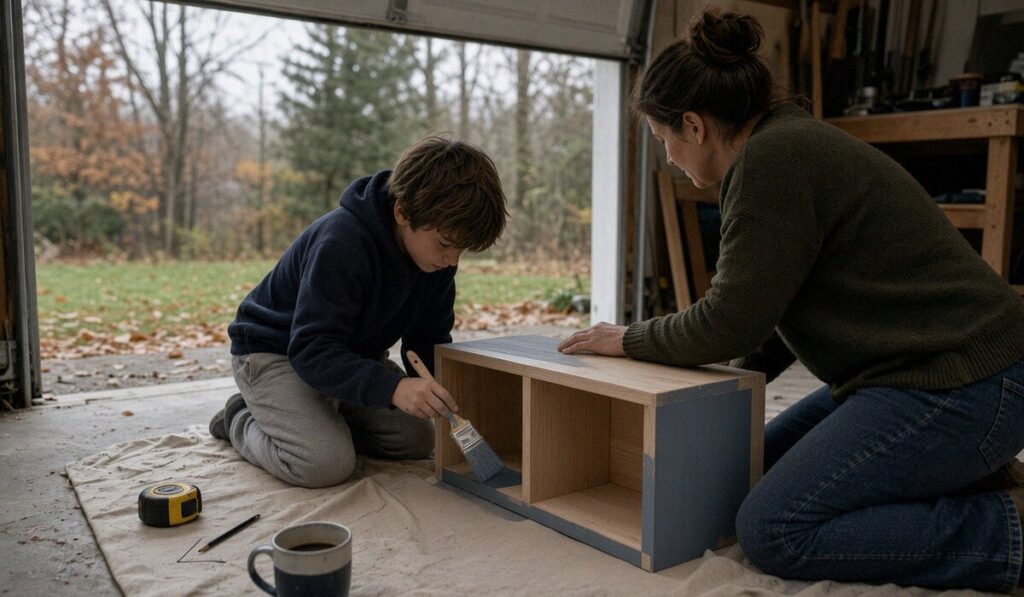
Building a tree house, redoing a bedroom, raising animals, and organizing the garage can all be golden opportunities to teach:
- Responsibility — someone has to water the bunnies
- Planning — measuring actually does matter
- Patience — paint takes time to dry
- Follow-through — finishing is half the battle
But, How?
• Start with what your child is already interested in.
• Include them in the planning
Before jumping in, ask your child:
– “What supplies do we need?”
– “What steps should we take first?”
– “What could go wrong, and how do we handle it?”
This develops foresight, responsibility, and realistic expectations.
• Resist the urge to rescue: Projects are supposed to include mistakes. Your role is a guide, not a project manager.
• Help them reflect afterward.
When the project is done, walk through:
– “What was the hardest part?”
– “What are you proud of?”
– “What would you do differently next time?”
Reflection cements character growth far more than the finished product.
• Use projects to teach family contribution: A child who builds a new storage shelf for the playroom, organizes the pantry, or helps plan a garage sale learns that they are capable and needed. That sense of belonging leads to better behavior, higher confidence, and improved work ethic down the road.
• Keep projects small and consistent: Not every project needs to be a remodel. Small projects, such as designing handmade birthday cards or organizing their room, teach initiative and responsibility.
From Theory to Action
The good news is that character training doesn’t require a curriculum, a certification, or extra hours in your week. It simply requires awareness. The next time your child hits a setback in sports, wrestles with a difficult hobby, or tackles a messy family project, pause and notice the character being shaped in real time. Comment on it. Celebrate it. Let them struggle a little. Let them succeed a little.
These everyday experiences, the wins, losses, experiments, frustrations, and breakthroughs, quietly shape the adults our children will become. And when we lean into those moments with intention, we give them something far more valuable than academic success: the internal strength to carry them through life.