
Homeschooling typically falls to one parent (the “primary parent”)—often at home—while the other (the “secondary parent”) focuses on other necessities, like the family income. Both partners carry a heavy load, and it takes dedication and teamwork to utilize this type of family dynamic successfully.
Many times, the secondary parent appreciates the sacrifices their partner makes to educate the kids, but is at a loss when it comes to how they can support and aid their teammate. If this is you, we have good news! This article is just for you.
As a homeschooling mother myself, I understand how validating and encouraging it is when my husband takes the time and makes the effort to be involved, recognize my work, or encourage the kids in their academic achievements.
Nothing propels a child further toward success than parents taking their combined knowledge and pouring themselves into personalizing the educational experience. Even if you’re not home much, you can play a vital role in making your homeschooling partnership flourish. Here’s how to be supportive, involved, and constructive—without overstepping.
Recognize the Value of the Primary Educator
Everyone needs to hear that they’re appreciated and that their efforts don’t go unnoticed. Expressing your appreciation for the job your partner is doing will go a long way toward encouraging and supporting them. Let your spouse know you see and admire the dedication and effort they pour into educating your children.
Be sure to acknowledge and validate their work from time to time publicly. The simple fact is our culture often elevates and appreciates teachers in the school system, but doesn’t have the same view of teachers at home. In conversations with your kids, extended family, or friends, validate your teammate’s work or highlight specific wins (“Mom taught the kids fractions today, and they nailed it!”). This public reinforcement boosts morale.
Offer meaningful involvement
In your search for hands-on ways to support your spouse, there are practical options available to you.
- Take on a subject or skill: Teach a subject you enjoy or know well—math, programming, life skills (basic car maintenance, gardening, budgeting)—whatever fits your strengths. Keep in mind that school doesn’t always have to happen at certain times of day – or even on weekdays. Weekends can be a valuable asset.
- Help with lesson prep: Review curricula together when you can—provide input, ask thoughtful questions, and offer to participate in curriculum decisions. If you have the time, read educational articles or research that is pertinent to your student’s or your own parental journey, so you can make informed decisions and engage in meaningful discussions.
- Act as a sounding board: Sometimes all your spouse needs is someone to listen. Resist the urge to “fix”—just empathize and ask, “How can I help? But be prepared to actually offer solutions or ideas if that’s what your spouse is requesting.
- Communicate: Let your partner know that you’re emotionally and mentally available. A quick text asking how school is going that day, or responding in a meaningful way when your spouse shares something about the day, can go a long way.
Be a facilitator of balance and self-care
In parenthood, both partners need a break and time for self-care. It can be difficult for a stay-at-home parent to set aside their duties and create opportunities for themselves, because they work and live in their place of “employment.” As the working parent, you can help facilitate a little time each day or each week to keep your teammate from burning out.
- Give them space: Occasionally, take the kids out or handle dinner so your spouse can enjoy uninterrupted rest or a quiet moment.
- Arrange a night off: Bring home take-out or let them have an evening out—alone time is rejuvenating.
- Encourage social or “personal” time: Let your spouse go out with friends, go for a walk, take a bath, or have a night just for themself.
Be present—emotionally or physically, when you can
Parenthood is a joint venture. While you may not be able to be with your kids 24/7 like your homeschooling spouse is, you can seize the opportunities to participate when they present themselves.
- Join field trips or family learning: Turn vacations or family outings into learning journeys, or be involved in fun projects at home.
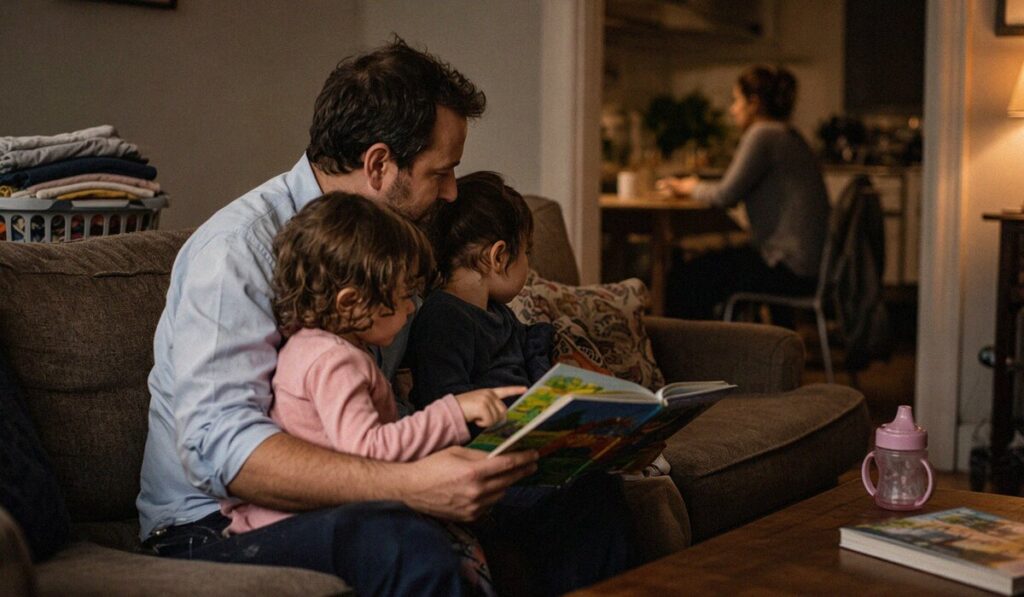
- Read to your kids: Reading is a powerful homeschooling tool that can also serve as a bonding experience between parent and child. As a bonus, it will also take some of the pressure off of your homeschooling spouse to read to the kids, and the time you’re reading will give your teammate a few kid-free minutes!
- Listen and participate: When the kids explain what they’re learning, listen genuinely—even if you already know the topic. Discuss their achievements and struggles with them. Kids need to communicate and talk with the adults in their lives. By sharing in this activity, you take some of the pressure off your homeschooling spouse, who usually carries the mental listening load.
- Model lifelong learning: Your spouse and kids will see that you value education when you’re learning new things—repairing items around the house, getting a certification, attending a class, etc. You could even learn new skills alongside your kids, combining the value of bonding and education.
Guard the partnership and household unity.
A united front is essential for a successful homeschooling family. Disagreements, especially over educational matters, should always be handled privately. Show consistent support publicly for your spouse’s efforts.
Your spouse should find you a safe place to communicate frustrations or concerns. Listen openly to what they share. If your spouse is feeling overwhelmed or criticism arises, step back and talk it through calmly, without defensiveness.
Know your spouse
Knowing your spouse will help you navigate the supporting role in the homeschooling team. Small gestures that fit their personality are a way of showing encouragement and solidarity. A loving note, flowers on the “first day,” or spontaneous praise can go a long way. Recognize their “love-language.” Whether it’s a word of affirmation, acts of service, or quality time—know what makes them feel supported and lean into it.
Why it matters
Supporting a homeschooling spouse isn’t about micromanaging or handing off teaching duties; it’s about standing shoulder to shoulder. Strong families are grounded in mutual support and teamwork.
Don’t assume that, because you aren’t able to be home teaching the kids all day long, that your efforts, input, and support are optional. Your homeschooling team needs both offense and defense – or in this case, offense and support.
Keep your eyes open for those opportunities and magnify your partner’s efforts!