
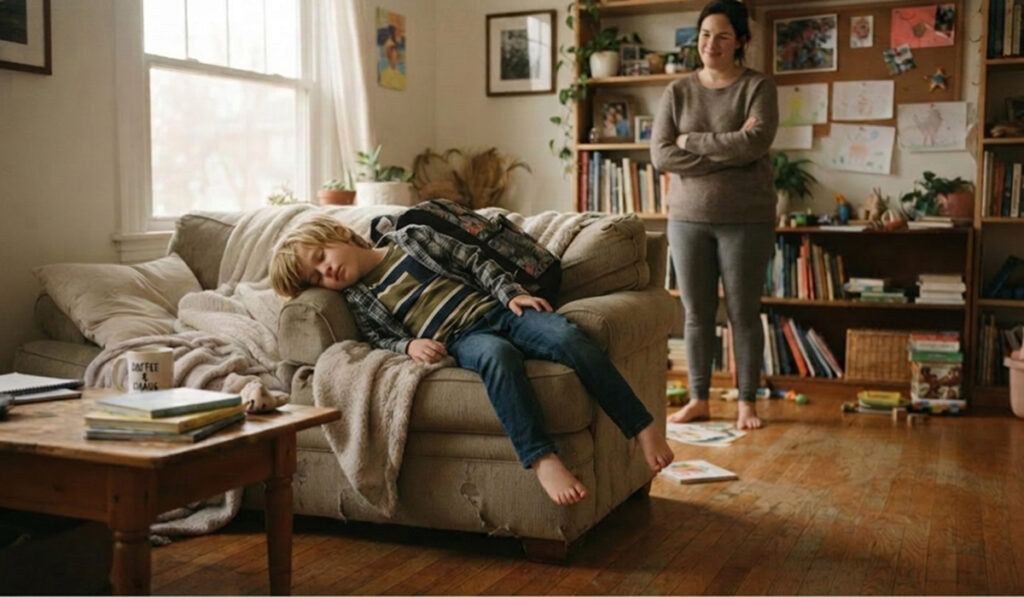
By the time your child gets home from school, they’re done. Not done with the day, but done being “on.”
Done listening. Done sitting still. Done trying to keep up.
And what do most of us do?
We continue our day as if they’re ready to bounce back into home life. We ask questions, give instructions, and head directly into homework, chores, and the next set of expectations.
It’s no surprise that some days, everything feels harder than it should. The truth is, the most important part of your child’s day doesn’t happen in the morning rush.
It happens after school, when they’re tired, a little overwhelmed, and quietly looking for a place to land.
What you do in those hours matters.
The Hidden Second Half of the School Day
School doesn’t actually end at dismissal; it simply changes locations. Your child doesn’t walk out of the building as a blank slate, ready for the next part of their day to be neatly written for them.
They walk out cognitively drained after hours of listening, focusing, navigating peer dynamics, following rules, and trying to get things right. Even kids who love school, do well socially, and thrive academically still need time to decompress and reset.
The Institute of Positive Education labels the difficult after-school behavior as “after-school restraint collapse, a release of the emotional and cognitive effort children have been holding together all day.”
They go on to explain, “In essence, restraint collapse happens because children spend hours at school using up their internal ‘self-control tank.’…they continually inhibit impulses, manage emotions and maintain attention. By the end of the day, this reservoir of energy is depleted. At home, often a child’s safest place, the ‘lid’ comes off and behaviors that were held in all day are finally expressed…”
That means the after-school window isn’t just “free time.” It’s a transition period, and how it’s handled matters.
Stop Asking “How Was School?”
You already know the answer.
“Fine.”
“Good.”
“Nothing.”
Your child probably wants to talk, but it’s too big a question. It’s vague and taxes their already stressed brain.
Instead, try specific questions to jump-start real conversation with your child. Maybe, “What made you laugh today?” or Who did you sit with at lunch?”
If you want to get right down to brass tacks, something like, “What was the easiest part of your day?” or “What felt hard?” may encourage your kid to open up.
These questions work because they’re specific and low-pressure.
Understood.org explains why these types of questions are more successful. “Phrasing your questions this way invites your child to talk. But don’t expect for every question to result in a long, detailed answer. The goal is to have many small conversations over time.”
Protect the Decompression Window
Many afternoons quietly fall apart when we breeze past the decompression window. Imagine your kid walks in the door. As soon as you realize they’re inside, you prompt, “Take off your shoes.”
They remove their shoes, set them in the cubby, and you remind them, “Wash your hands.” You hear the bathroom sink running, and smile as you return to your work. Your child shuffles into the room and plops onto the couch.
You glance their direction and reluctantly ask, “Do you have homework?” They slowly nod, staring at the wall. “Do your homework,” you respond.
Your kid has been home for 15 minutes, and they’ve done nothing but follow more directions. None of those directions are bad, but after a long day, they quickly add up.
Their first few minutes at home pile on the rest of the day, and it’s overwhelming.
Buffers offer kids a chance to decompress and reset their minds and bodies. Maybe 20–40 minutes of quiet play or perhaps a snack and one episode of their favorite TV show. Quietly sitting on the front porch swing, or just… sitting and staring at the wall.
What may be mistaken for laziness may actually be regulation.
The decompression window offers kids an opportunity to regulate their nervous system and leave the cares of the school day behind before engaging in family life.
Homework Isn’t the Main Event
Homework feels important (and let’s be clear…it is). It’s also a visible, measurable goal that doubles as proof that your kid is learning and growing.
But…
The reality is that homework is not the most important thing happening in your home that evening. The greatest achievement in the off-school hours is relationship building. These are the precious minutes where you build a bond, get to know one another, and share your lives with one another.
These are the hours that quietly build your relationship over time. If homework disrupts this time, or it becomes the daily battleground, something is off.
However, homework and relationship building can go hand in hand. When parents are involved in their children’s learning, the data shows that the academic outcomes are better. Working with your child on homework can support both learning and connection at the same time.
It doesn’t need to be an intense school session. “Let’s do our best, then we’ll move on,” is a perfectly acceptable attitude to have. A child who feels supported and connected at home is more likely to succeed long-term than a child who completes every worksheet perfectly under stress.
What Many Parents Miss
It’s easy to think your role is to manage the logistics like food, homework, and bed. But the deeper role is quieter than that. You’re helping your child process their day, regulate their emotions, recover from stress, and feel known and supported.
What will your child carry with them? What they carry is how it felt to come home.
Did they feel rushed, or welcomed home? Were they pressed to perform even more, or were they given space? Was their home time centered around management or relationship?
Every afternoon, whether you realize it or not, you’re establishing a pattern that home is either a safe place of recovery or another institution of performance.
This pattern shapes how they see learning, handle stress, and walk back into tomorrow. In the long run, those moments matter far more than whether the homework was finished without a struggle.